
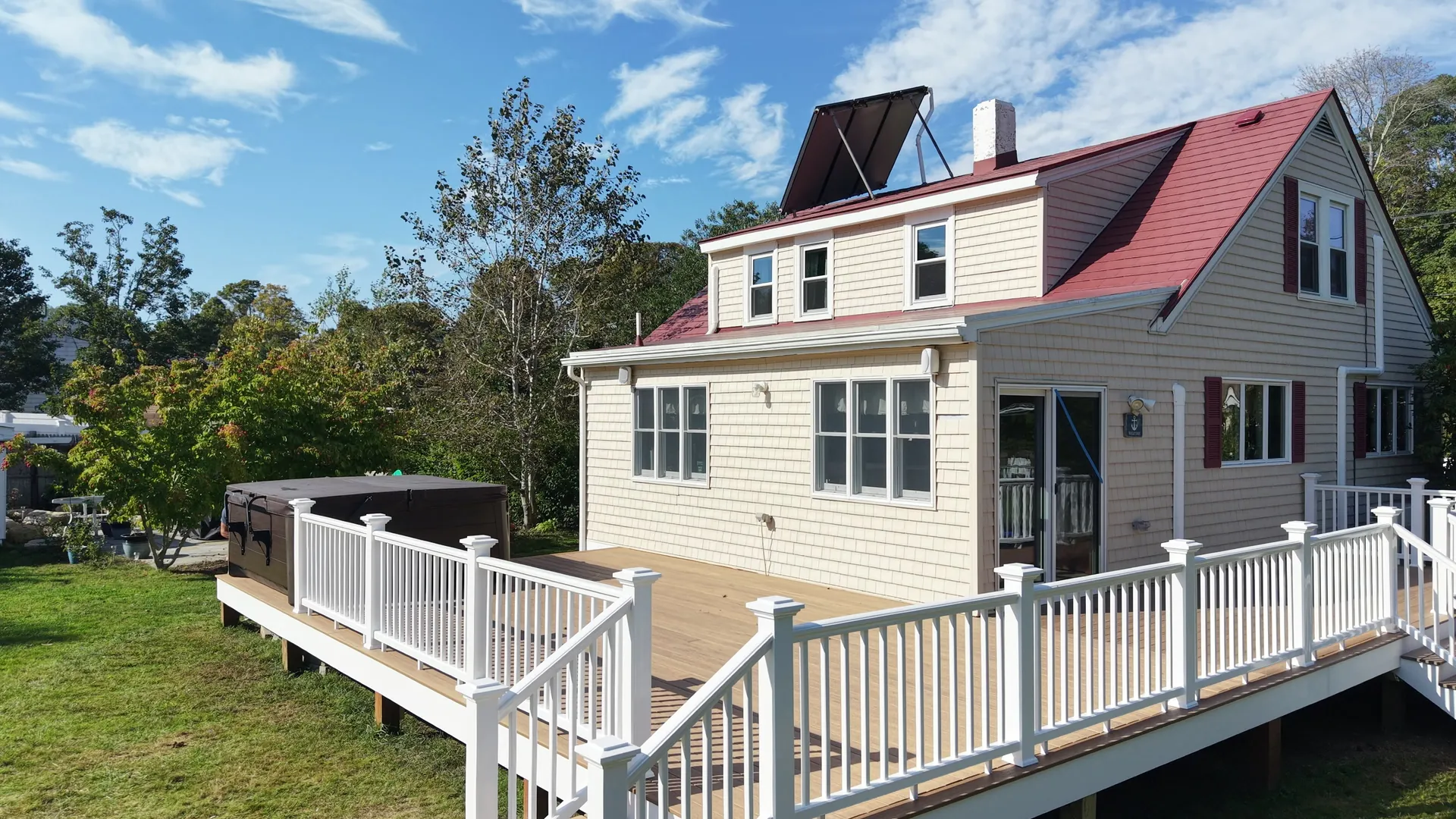
The lowest-maintenance deck on Cape Cod is a composite or PVC deck on well-built pressure-treated framing, with corrosion-resistant hardware and a matching low-maintenance railing. The boards are only part of it: salt air, strong sun, and shady, damp lots are what wear a deck out here.
What low maintenance really means
No deck is zero maintenance. Composite and PVC decks still need a wash once or twice a year to clear pollen, leaves, and the mildew that grows in shady spots. What they skip is the sanding, staining, and sealing a wood deck needs to stay in good shape.
Hardware and salt air
On the Cape, rusted hardware ruins more decks than worn boards. Joist hangers, post bases, screws, and bolts should be stainless steel or hot-dip galvanized, and close to the ocean, marine-grade stainless (type 316) is the safer choice. Once the connectors corrode, the deck is only as strong as the wood around them.
Railings, stairs, and trim
A composite deck with a painted wood railing still needs painting. To get the full benefit, choose a composite, PVC, or aluminum railing, cover the framing at the edges with composite or PVC fascia, and use matching stair treads.
- Composite and PVC railings: wash them; no painting.
- Aluminum railings: powder-coated finish, very little upkeep.
- Cable railings: open views of the water; the cables need re-tensioning now and then.
- Wood railings: the most traditional look, and the most upkeep.
Keeping the framing healthy
Under every composite deck is a wood frame. Leave room for air to move under low decks, flash the ledger where the deck meets the house so water stays out of both, and keep soil and leaves from piling up against posts. On wooded lots near ponds, like many in Brewster and Wellfleet, shade keeps decks damp longer, which makes airflow and board choice even more important.